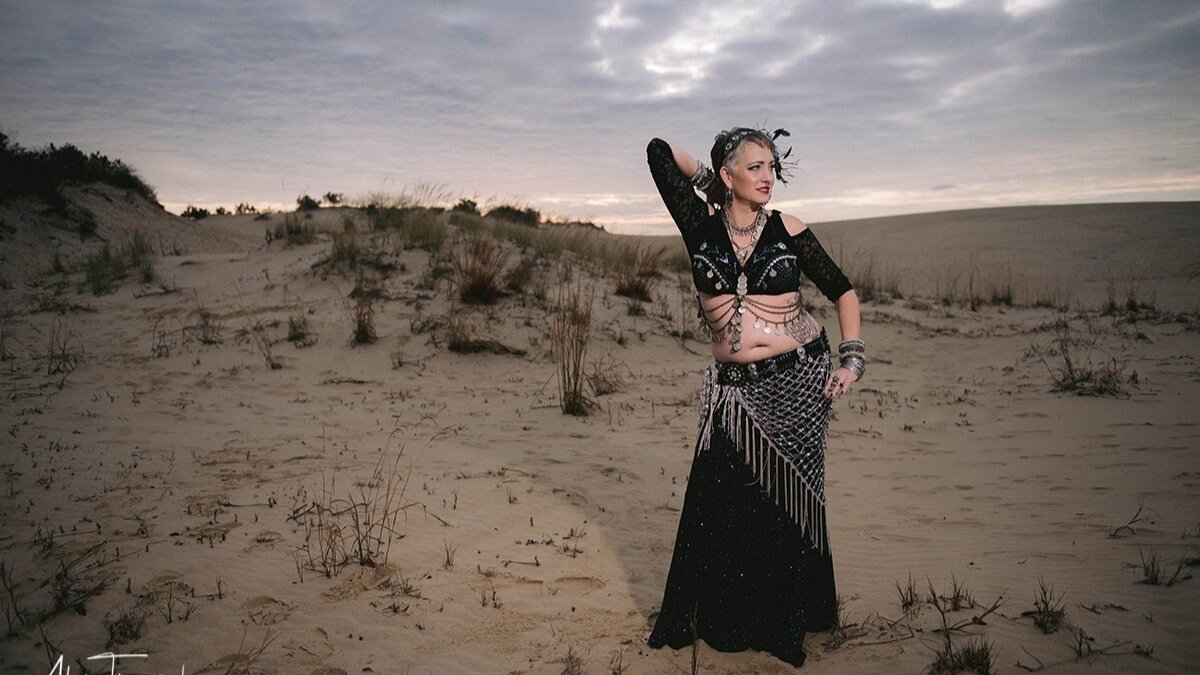
Mind in Motion
& Psychology of Dance Blog
Mind in Motion: Where psychology meets the dance floor.
Lisa's background as a licensed psychotherapist informs a unique set of workshops exploring the inner life of dancers, teachers, and troupes. Mind in Motion offerings draw from her book-in-progress of the same name, covering four interconnected areas:
Energy & Motivation
Managing performance energy, building sustainable practice habits, recovering from burnout, and developing the stage presence that stops a room.
Dance Dynamics
The psychology of lead and follow, the neuroscience of group flow and synchrony, and the communication skills that make troupes cohesive on and off the stage.
The Business & Identity of Dance
Readiness to teach, finding your artistic voice, overcoming comparison and imposter syndrome, and creating welcoming class environments.
Healthy Communities, Healthy Artists
Trauma-informed spaces, ethics in dance communities, boundaries for teachers and students, and giving and receiving feedback with clarity and care.
These workshops are available as standalone offerings or combined into a themed intensive. All are grounded in research, practical tools, and experience.
Psychology of Dance Blog

Why Your ‘Why’ Matters: Spiritual Energy (Meaning)
We’ve covered the physical foundation, the emotional landscape, and the mental tools. Spiritual energy or meaning is the topic of today’s blog post.
Spiritual Energy or The Energy of Meaning
Why do you do what you do? Spiritual energy is generated by acting in alignment with your deepest values, and it is depleted when your daily life consistently contradicts what matters most to you.
Viktor Frankl, the psychiatrist who survived the Nazi concentration camps and wrote Man’s Search for Meaning (1959), observed that people could endure almost any suffering if they had a clear enough sense of purpose. Contemporary research supports this across contexts: a strong sense of meaning predicts greater resilience, psychological well-being, and performance under pressure (Damon, 2008; Peterson & Seligman, 2004).
When your actions align with your values, decisions feel easier. When they don’t, everything feels harder.
Why This Matters Specifically for Dancers
People dance because it means something to them, whether that be expression, connection, beauty, joy, or identity.
The teaching schedules, the politics, the social media presence, the money anxiety, and the competitive hierarchies can slowly crowd out that meaning. You find yourself doing the thing you love in ways that feel at odds with why you started.
Spiritual energy depletion often shows up as: “Why am I even doing this?” or realizing you are just “dialing in” (or performing a task with minimal effort) in your performances.
Begin with a Values Clarification
My values are recorded in the “notes” APP on my phone. I refer to them regularly, and have done so for a decade since I first did this exercise. I started by brainstorming with a list of things that are important to me (around 30), then realized I could group them into categories, and ended up with 5 simple, easy-to-remember values. My values are 1- prioritizing friends and family, 2- lifelong learning, 3- aging with joy, health, and vitality, 4- achieving financial security, and 5- promoting social justice. You can’t align with values you haven’t named, so take a moment to consider your big “why”. Here are some reflection questions to help.
What would I do if no one ever knew or judged my choice?
When have I felt most proud of myself, and what was I honoring in that moment?
What am I unwilling to trade away, even for something I really want?
What frustrates or angers me most in others?
Next comes the difficult part.
Look at how you spent your time last week. Does it reflect what you just wrote down?
The gap between stated values and lived behavior is one of the most reliable sources of chronic energy depletion. I used to be the director of a University Counseling Center, and 80% of what students came in to discuss was some version of this: they were experiencing distress because their current behavior was not consistent with their values. Even a brief 5-minute monthly review of your values can help you align your behavior with them.
Another suggestion to help you align your values and your actions is to enforce a “sleep on it” rule before you say “yes” to something asked of you. This will help you make value-aligned choices. The pause allows you to avoid saying “yes” to please someone, even if it does not align with you. Taking a moment to see whether the new “ask” aligns with my stated values (and how I want to spend my time) almost always makes my answer both easy and obvious.
My favorite technique is to draw a line down the middle of a sheet of paper. On one side, write your values; on the other, write how you spent your time over the last day/week/month. If any of the ways you spend your time don’t align with your core values, consider moving them off the list. After doing this exercise the first time, I quit a non-profit board, I closed a business (The Belly Dance Business Academy), and I left my long-time dance troupe. Ending those energy outlays made space for me to create a dance and personal life I really love, even though it felt risky and sad at the time.
This is the end of the Energy Management section of my book, Mind in Motion. In the next blog, we will learn about one of my FAVORITE topics: Habit Formation and Motivation.
Coming up in Habit Formation and Motivation:
Post 1: Why Motivation Keeps Failing You
Post 2: The Science of Making Practice Stick
Post 3: Make Practice Irresistible
Post 4: When Your Habit Breaks
Post 5: Become the Dancer You Want to Be
Remember, you are not meant to run on empty. You are meant to move in cycles through stress, recovery, growth, and expression. That is the rhythm of the body, the mind, and the dance. Begin noticing your energy and managing it with intention, and notice what happens. I would love to hear.
References
Clear, J. (2018). Atomic Habits. Avery.
Damon, W. (2008). The Path to Purpose. Free Press.
Fogg, B. J. (2020). Tiny Habits. Houghton Mifflin Harcourt.
Frankl, V. E. (1959). Man’s Search for Meaning. Beacon Press.
Lally, P., et al. (2010). How are habits formed: Modelling habit formation in the real world. European Journal of Social Psychology, 40(6), 998–1009.
Peterson, C., & Seligman, M. E. P. (2004). Character Strengths and Virtues. Oxford University Press.
Wood, W., & Neal, D. T. (2007). A new look at habits and the habit–goal interface. Psychological Review, 114(4), 843–863.
Emotional & Mental Energy for Dancers
Emotional and Physical Energy
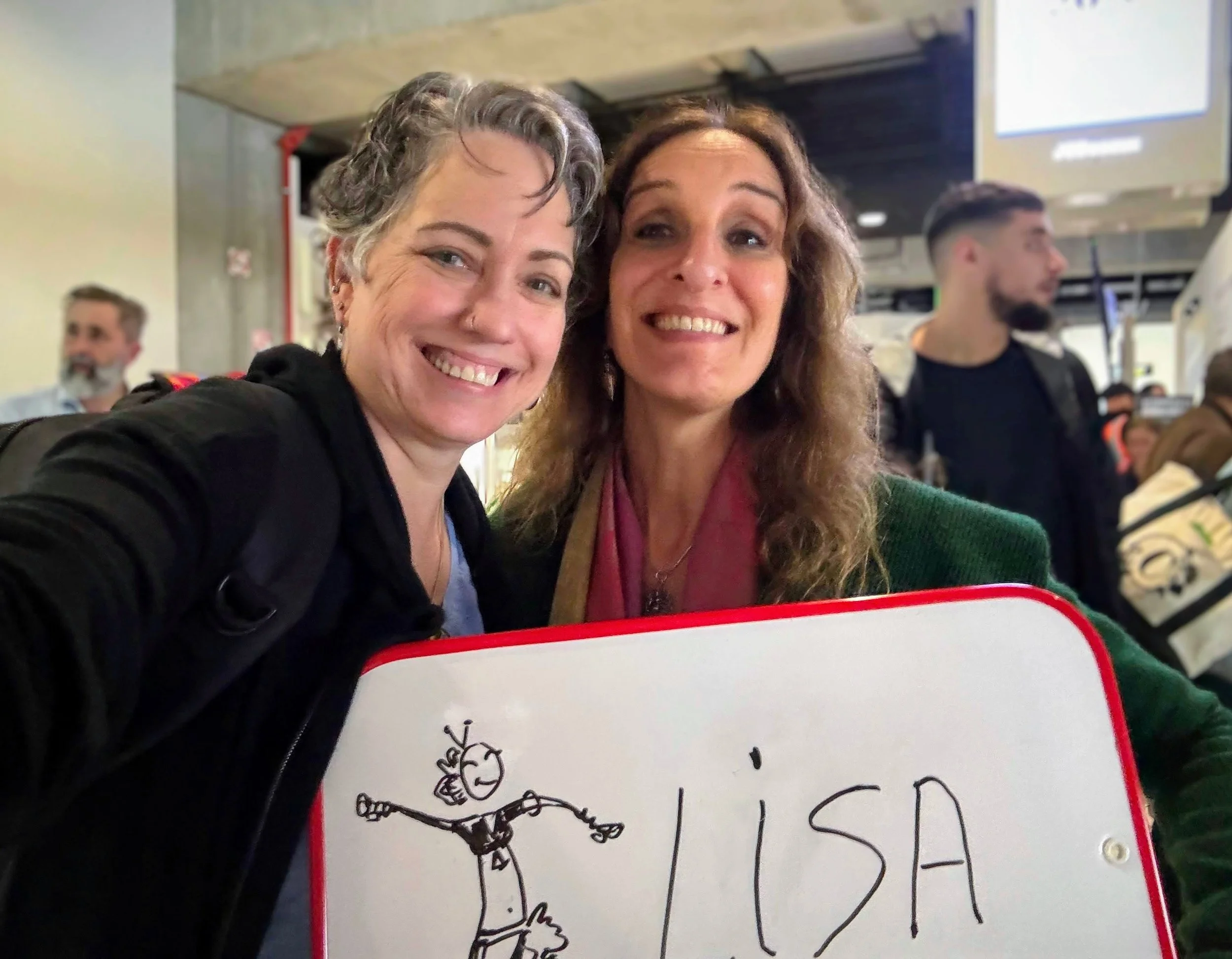
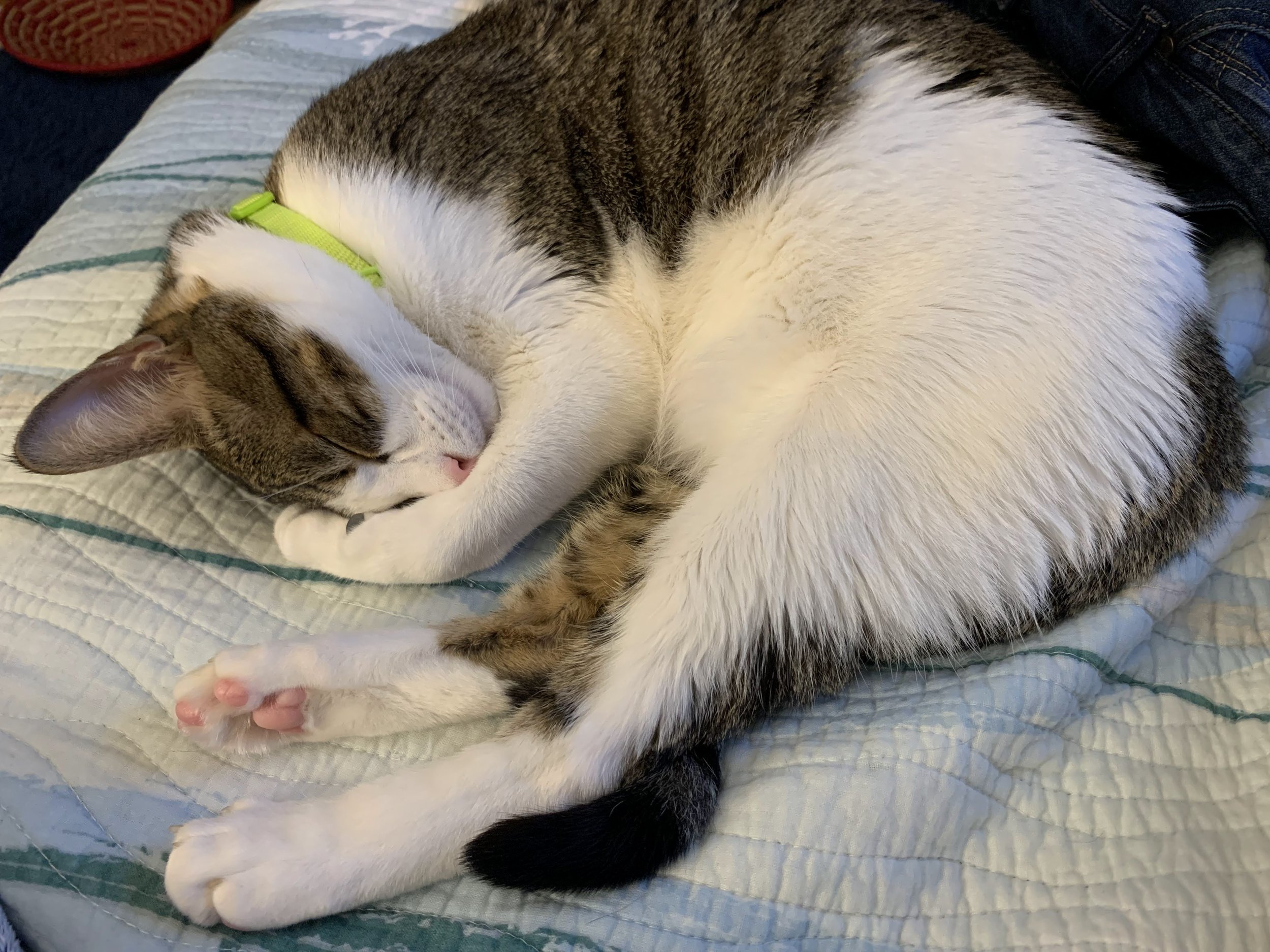
This picture is of sweet Caroline Minard who invited me to stay at her home after I taught 8 workshops in Germany and before I taught more in France. I was physically and mentally exhausted and slept for 2 days. I was not a very exciting house guest.
You've been working on the fundamentals of sleep, nutrition, and movement, but something still feels off. Maybe you are feeling emotionally flat or unable to focus in class. Maybe you are leaving rehearsal more drained than when you arrived, even though nothing was particularly demanding. You might be experiencing emotional and mental energy depletion, and it limits us just as surely as a physical injury does.
Emotional Energy
For our discussion, we are defining emotional energy as the quality of feeling you bring to dancing, learning, and connecting with others. It shapes your expressiveness, your stage presence, and your capacity to take artistic risks. When your emotional energy is depleted, technique can still get you through a class, but you might find that the spark is missing.
When you are emotionally dysregulated, whether anxious, resentful, grieving, or simply stretched too thin, your brain does not function the same way. Your cognitive flexibility diminishes, you're less creative, and you’re not able to make decisions as effectively. Dysregulated emotional states also deplete your cognitive and physical resources and suppress your immune function. (Davidson and Begley, 2012) That experience of "I just couldn't get it today" is often less about the choreography and more about what your nervous system was dealing with before you walked into the dance studio.
The Contagion Problem
Emotions move between people as quickly as the common cold. Emotional contagion describes our mostly automatic and unconscious tendency to synchronize with the emotional states of those around us. (Hatfield, Cacioppo, and Rapson, 1993) You might have experienced emotional contagion when a teacher who is calm and grounded walks into the room, and something in you settles. Or when a troupe member is really anxious before a performance, and you also start to get anxious even if you were previously calm.
Managing your own emotional state is not just self-care; it helps every person you dance with, teach, or create beside. Learning to protect your emotional state from others' emotions is a legitimate and necessary skill, not an act of selfishness.
Where do Dancers Lose Emotional Energy
You cannot address an energy drain that you have not yet named. Here are some of my ideas.
Comparison with other dancers
Perfectionism around technique
Social tension within your dance company or troupe
Teaching dance
Constantly offering yourself up for assessment… from your teacher, classmates, and audiences
What drains YOUR emotional energy the most?
Mental Energy
Mental energy is your capacity to concentrate, think flexibly, and consciously direct your own thoughts. Mental fatigue does not only come from working hard. It also happens when you are distracted, task-switching, and in “cognitive loops”.
What are Cognitive Loops?
A cognitive loop is an unresolved thought that your brain keeps returning to, even when you are trying to focus on something else. Think of it as an “open file” that your brain cannot close until there is some resolution. Your brain keeps returning to the issue because it remains unresolved.
Common examples in a dancer's life might be: "I still don't understand why my teacher was upset after last week's rehearsal," or "I keep making the same mistake, and I cannot figure out why," or "I said something to my troupe member, and things have been tense ever since." None of these is catastrophic on its own, but your brain does not distinguish between large and small unresolved loops. Everything unresolved feels like a threat to our emotional well-being.
Closing loops requires specificity. Writing something down with a concrete next step closes the loop in a way that vague intention does not. "I'll speak with my teacher on Thursday" is a closed loop, while "I should deal with that at some point" is not. Making a decision, even an imperfect one, is another way to close a loop, because indecision is one of the most depleting cognitive states. Learning to distinguish between loops that require action and loops about things you cannot control takes practice.
The Multitasking Trap
What we experience as multitasking is, neurologically speaking, rapid switching between tasks, which degrades our performance on all of them (Ophir, Nass & Wagner, 2009). Deep, sustained attention generates mental energy over time while fragmented attention reliably depletes it. When I get involved in projects I am really enjoying (like writing this book), I can work for hours and still feel energized when I put it down. Try an experiment. Stop multi-tasking for a day or a week and see how you feel. Are you moving through your tasks faster than you expected? Are you less cognitively tired at the end of the day?
Reframing as a Practical Tool
As a therapist, my primary training and practice is using Cognitive Behavioral Therapy (CBT). If I had to distill CBT down to a sentence, it would be:
Despite what most people believe, events do not directly cause emotions; our emotions come from our thoughts about the events.
Event → Thought → Emotion
Most people experience this chain so quickly that the middle step becomes invisible and the event seems to produce the feeling directly. When you can slow down enough to see the thought, you have power that you didn’t have before… the ability to choose a different interpretation.
Consider a familiar scenario. Another dancer who began training around the same time you did has moved into the advanced-level class, but you have not. Your first thought might be “the teacher likes her more,” which leaves you feeling discouraged and resentful. That thought is one interpretation of the event that may or may not be accurate, but it came into your thoughts automatically, and you accepted it without examination. I had a great CBT therapist (before I was a therapist) who would always say, “Stop making up stories!”
Here are a few questions you can ask yourself to try to interrupt that process:
"How might the opposite of this also be true?"
This statement disrupts catastrophizing almost immediately and helps you acknowledge that your brain was not offering you different interpretations.
"What would I say to a close friend who came to me with this exact situation?"
This will help you activate self-compassion rather than self-criticism.
"Is this a problem or a challenge?"
You might be “rolling your eyes” like I did the first time I heard this. It sounds straight out of a movie about bad personal coaching. However, it is worth serious consideration because research demonstrates that reframing stress as a challenge rather than a threat results in measurably better physiological and performance outcomes (Jamieson, Mendes, and Nock, 2013).
Reframing is not an exercise in pretending things are fine when they are not. It is the practice of choosing the most accurate and useful interpretation available to you, which is very often not the one your brain produces first.
Bringing It Together
Emotional energy drains can come from unmanaged feelings, comparisons, and openness to feedback about your dance. Mental energy drains from cognitive loops, fragmented attention, and the unexamined thoughts we allow to run on autopilot. The strategies here are not complicated, but they do require intention and practice, so choose one that resonates and bring it into your next class.
References
Beck, A. T. (1979). Cognitive Therapy and the Emotional Disorders. Meridian.
Davidson, R. J., & Begley, S. (2012). The Emotional Life of Your Brain. Hudson Street Press.
Ellis, A. (1962). Reason and Emotion in Psychotherapy. Lyle Stuart.
Hatfield, E., Cacioppo, J. T., & Rapson, R. L. (1993). Emotional Contagion. Cambridge University Press.
Jamieson, J. P., Mendes, W. B., & Nock, M. K. (2013). Improving acute stress responses: The power of reappraisal. Current Directions in Psychological Science, 22(1), 51–56.
Loehr, J. & Schwartz, T. (2003). The Power of Full Engagement. Free Press.
Ophir, E., Nass, C., & Wagner, A. D. (2009). Cognitive control in media multitaskers. PNAS, 106(37), 15583–15587.

Energy Management: Sleep, Nutrition, and Movement
You cannot “reframe a negative thought” when you’re running on four hours of sleep and a bag of pretzels.
Physical energy is your foundation, and when it collapses, everything else goes with it.
In this post, we’ll explore concrete strategies for three critical domains of Energy Management: Sleep, Nutrition, and Movement.
Sleep = Your Most Underrated Training Tool
Neuroscientist Matthew Walker calls sleep “the single most effective thing we can do to reset our brain and body health each day” (Walker, 2017). Even modest sleep deprivation (for example, sleeping only six hours a night over several days) produces cognitive deficits equal to what you would experience if you didn’t sleep for 24 hours. Sleep-deprived people don’t usually realize how impaired they are, which presents obvious safety issues. For Dancers, driving to class is riskier, but the risks don’t end when you step inside the dance studio. Physically, our proprioception (your body's ability to sense its own position, movement, and force in space) and reaction times are both reduced when you have missed sleep. Mentally, our creative flexibility and problem-solving ability are reduced. Emotionally, we are less able to regulate our strong emotions.
So far, we are just talking about regular classes and weekly routines; we haven’t even gotten to festivals and workshop intensives. Sleep (and the resulting low energy) was such a big problem for me when I co-produced a yearly international dance festival that I started meditating daily throughout the year to prepare for the sleep deprivation I experienced during the festival week. Meditating was a quicker way to replenish my energy than napping.
Basic Sleep Hygiene for Dancers
Turn off screens at least 30 minutes before bed because blue light suppresses melatonin
Keep your bedroom near 65°F / 18°C so your core body temp can drop before you fall asleep
Reserve your bed only for sleep and sex to help your brain develop a clear association
Keep a consistent wake time even on weekends
Expose yourself to sunlight right after you get up and moving
Create a wind-down ritual: the same sequence, every night, signals your nervous system to downshift
Event-Specific Sleep Strategies
Late-night socials, adrenaline, alcohol, overstimulation, and a hotel room that isn’t yours all but guarantee you aren’t going to sleep well. Plan for it:
Set an alcohol cutoff at least 3 hours before bed (alcohol disrupts REM sleep)
Hydrate aggressively before and during the event, not just after
Eat a light, simple snack after the late-night social (not a full meal)
Resist the urge to scroll through event photos in bed (this one is the most difficult for me to do)
Nutrition: Fuel the Performance, Not the Crash
Your body runs on stable blood glucose. High-glycemic foods like sugar, refined carbs, and juice spike your blood sugar fast… then you crash. Low-glycemic foods that have protein, healthy fats, and fiber digest slowly and deliver steady, sustained energy.
The dancer’s version of this problem: you’re getting ready for a performance after a day of workshops, and someone hands you chocolate. Yum! You feel better briefly, then you crash harder right before you need to perform. I know I have done that many times.
At Dance Events: Build Your Food Plan
Protein-rich breakfast within an hour of waking
Pack your own snacks so you don’t depend on the event’s food options
Strategic afternoon snack (nuts, apple with peanut butter, hard-boiled egg) to prevent the afternoon crash
Choose a light, balanced dinner after the show and save the bigger celebration meal for later
Movement: Create Energy, Don’t Drain It
Here’s the paradox: movement creates energy but overtraining drains it. Research on sedentary behavior shows that prolonged sitting impairs metabolism and cognitive performance, even in otherwise active individuals (Biswas et al., 2015). But going full-out in every workshop at a four-day festival falls into overtraining.
Your body will tell you when you've crossed the line from training into overtraining. Look out for physical signals like soreness that doesn’t resolve normally, movements that suddenly feel harder than they should, minor injuries that keep recurring, or feeling exhausted when you are getting plenty of sleep. The psychological signals are equally important and might arrive first: dreading rehearsal instead of looking forward to it, irritability that seems specifically tied to dance, or a loss of motivation that doesn't feel like an ordinary fluctuation.
The complicating factor for dancers is that dance culture often works against us. “Pushing through” is usually celebrated. I decided not to give examples of times I have put my health second to dance because I have had too many conversations where we end up good-naturedly “one-upping” each other with the outrageous things we have done in the name of art.
Dancer 1: “I came to rehearsal from having a tooth pulled.”
Dancer 2: “Well, that’s nothing, I broke my leg and perfected my spinning with a cast on.”
Ok, I am being silly, but that is pretty close to how those conversations go. If your dance experience is like this, admitting exhaustion can feel like a character flaw. Research on stress and adaptation is clear: stress without sufficient recovery weakens the system rather than strengthening it. Part of your longevity as a dancer is dependent on reading your body's signals early and treating recovery as a vital part of training.
In Daily Life
Stand up and stretch every 30–45 minutes if you sit for long periods
Take at least one big movement break every 90–120 minutes
Get aerobic exercise 3 times weekly; resistance training 2 times weekly; flexibility work 2–3 times weekly
At Dance Events
“Mark” movements when you’re conserving energy. I studied ballet as a child and teen, and the teachers always told us when we were “marking” a rehearsal or dancing “full out”. I have rarely been in a class or workshop that has encouraged marking (other than mine), and I am not really sure why.
Use mental rehearsal during high-fatigue moments. I will talk much more about mental rehearsal later in the blog series, when our focus turns to dancing through illness and injury.
Stop significant movement at least 3 hours before sleep
Use full-body stretching as a quick energy reset mid-day
With these strategies, you can preserve energy, stay injury-free, and perform at your best when it counts.
References
Biswas, A., et al. (2015). Sedentary time and its association with risk for disease incidence, mortality, and hospitalization in adults. Annals of Internal Medicine, 162(2), 123–132.
Czeisler, C. A. (2013). Perspective: Casting light on sleep deficiency. Nature, 497, S13.
Driskell, J. E., Copper, C., & Moran, A. (1994). Does mental practice enhance performance? Journal of Applied Psychology, 79(4), 481–492.
Jenkins, D. J., et al. (1981). Glycemic index of foods: A physiological basis for carbohydrate exchange. American Journal of Clinical Nutrition, 34(3), 362–366.
Okamoto-Mizuno, K., & Mizuno, K. (2012). Effects of thermal environment on sleep and circadian rhythm. Journal of Physiological Anthropology, 31(1), 14.
Walker, M. (2017). Why We Sleep. Scribner.
How Some Groups of Dancers Move Like One Body
MIND IN MOTION · SPECIAL EDITION
I'm interrupting our regular series to celebrate something: Skills 'n' Zills, an Austrian FCBD festival, is almost here. One of the workshops I'm teaching in Linz this August is built on the ideas I've been developing in Mind in Motion: Blog to Book, so it felt like the right moment to share them with you directly, whether you’ll be in Austria or not.
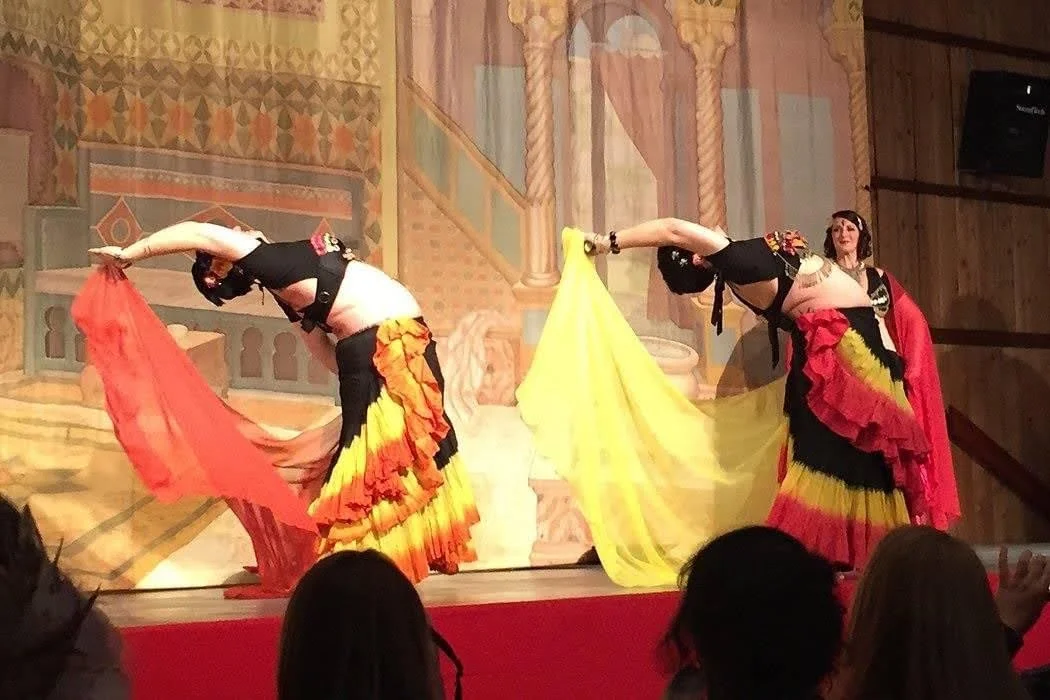
Picture: Me and my identical twin sister, Terri Allred. Being identical twins has a body matching advantage that most people don’t have.
Body Matching for Synchronization
Have you ever been hypnotized by a group of dancers who all have different heights, body types, and levels of experience but move as though they share a single nervous system? Those are magical performances. I used to think, "they must have been dancing together for years." Sometimes that is true. But sometimes the secret is not time. It is a specific set of skills that you rarely learn in dance class. I call the collection of skills “ Body Matching”.
The science that helps us synchronize is useful beyond achieving those magical performances. Body matching also helps with:
• Effective rehearsal, even when we are injured or sick and can't dance
• Movement discrimination- our ability to watch another dancer, identify the differences, and correct them
• Improved emotional and social connection in your troupe
What is Body Matching?
Body matching is the practice of mirroring your leader and troupe mates with precision. It means scanning from head to toe and noticing the details of weight, angle, timing, arm position, and more… then adjusting your own body to match. In group improv dance especially, it is what separates a collection of individuals doing the same move from a group that moves as one.
Most dancers do some version of this instinctively, but instinct will only take you so far. When you make this practice conscious and learn what to look for and how to look for it, the improvement is immediate and often surprising.
The Science Behind It (This part is cool)
When you watch another dancer move, the part of your brain that controls your own movement activates. Your brain is essentially practicing the movement while you watch. Scientists call this our mirror neuron system.
Observation doesn't replace physical practice, but combining the two accelerates learning. Research shows that people who learn movement by watching and copying acquire skills more rapidly and more precisely than those who learn through verbal description alone. Words are too slow and too linear to capture the simultaneous, multi-dimensional experience of a dance move. Your body learns differently when it watches another body “do the thing”.
I have a vivid memory of my General Skills training, with Carolena and Megha saying "less talking, more dancing" and Carolena telling us we learn better by watching and following. They were teaching us that when it comes to complex movement, observation is more effective than explanation.
This is also why injured dancers who observe class carefully are still genuinely learning. Their brains are mapping the movement even when their bodies can't execute it.
Body Matching is About More Than Copying
Here's where it gets interesting, and where body matching goes deeper than most dance classes go.
Because everyone's body is different, true body matching requires you to translate the movement- not just copy it. If your leader has a longer torso, matching her arm line exactly might look wrong on your body. If she is six inches taller, her reach creates a different spatial relationship to her center than yours does.
This is why the body scan I teach goes head to toe, and why the question isn't only "what is she doing?" but "what would this look like if my body were doing it?" Translating movement to your body is a more sophisticated task than copying, and it is a skill you can develop with practice.
What We Will Work on in August
My Body Matching workshop begins with around 20 minutes of discussion, followed by a series of movement exercises.
Some of the things we will work on:
• The head-to-toe scanning technique: both what to look for and in what order
• Body type adjustments: how to match your leader's intent and quality when exact replication isn't possible
• Flocking and group awareness: responding to the whole group, not just the person leading
• Using observation intentionally during class: whether you're dancing full out, marking, or sitting out with an injury
• The connection between body matching and fearless following: why better body matching makes you a more confident follower and a stronger leader
This workshop is for any level of group improv dancer who wants to look more synchronized. The content is as helpful to new dancers as it is to experienced teachers.
It is especially useful for:
• Dancers who are attending a festival and asking their bodies to dance harder and longer
• Intermediate dancers who can't figure out why they aren't progressing
• Teachers who want to build body matching exercises into their curriculum
• Troupe members who want to wow people with magically synchronized performances
• Any dancer who is injured or returning from injury and wants to accelerate their recovery
Come ready to watch, to practice, and to be pleasantly surprised by how quickly this changes the way you move in a group.
For teachers: If you attend the August workshop in Linz, I will share the written instructions for every exercise we do. Please take them and feel free to adapt for your own students.
Not coming to Austria? This content is part of the book I'm writing. If you signed up to receive chapters as I write them, watch your inbox. Body Matching is covered in chapter 6. If you didn't, it isn’t too late! Here is the link to make sure you don’t miss any Mind in Motion: Blog to Book content.
Map Your Energy: The Ecomap Tool for Dancers
Understanding what gives you energy and what depletes it is the first step in managing it.
What Is an Ecomap?
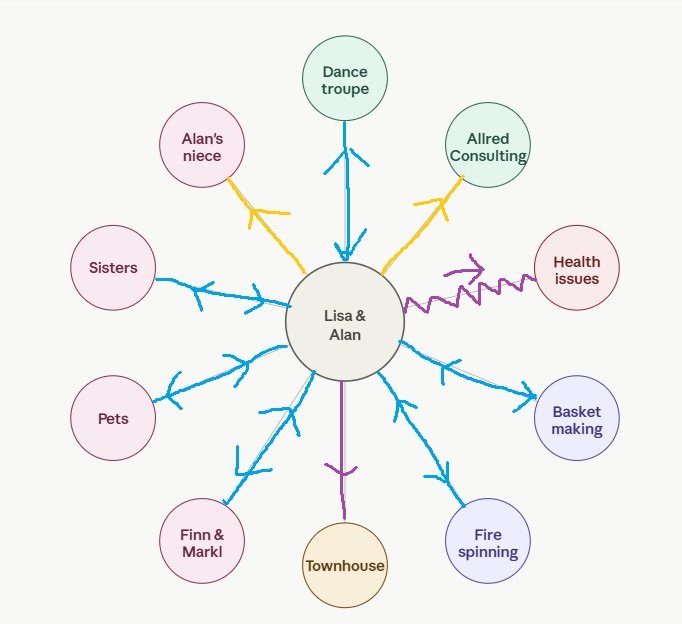
An ecomap is a diagram that maps your relationships with significant “systems” in your life: family, friends, work, dance community, health, social media, community organizations, and anything else that plays a meaningful role in your day-to-day world. It was created by Ann Hartman, a social worker, in the early 1970s. She was influenced by Systems Theory, the idea that we can’t understand a person in isolation; we have to look at all the systems they’re part of (Bronfenbrenner, 1979). For our purposes, we are using it to create a visual representation of support and energy flow.
An example of an ecomap is the simple one in the image for this blog.
A few things to note:
-Sometimes I put people together in a category (like my dance troupe), and sometimes I separate them out (like my husband’s niece who we recently helped with college applications). I give or get a significant amount of energy from an individual, which is different from what I get from the group they belong to.
-You can search online for Ecomap examples. It is a tool therapists use with their clients, but it can also be beneficial as a solo activity.
How to Make Your Ecomap
Get something to write/draw with. I like to use color, but you don’t have to.
Draw a circle in the center of the page and write your name inside it.
Draw smaller circles around you for every significant person, group, or “system” in your life right now.
Examples of people or “systems” you might want to include are: family, close friends, work/career, troupe/dance community, health/body, spiritual/religious community, social media, and anything else important to you.
Draw a line connecting each outer circle to your center circle. Here are some ideas for how you can use the lines to describe more about your relationship:
Solid line = strong, supportive relationship
Dashed line = weak or distant connection
Zigzag line = stressful or conflictual relationship
Add arrows on the lines to show the direction of energy. An arrow pointing toward you means that person/system gives you energy; an arrow pointing away means you’re giving energy to it. If the energy exchange is mostly mutual, you can draw arrows in both directions.
Use color if you have it. One color for supportive lines, another for stressful ones. Color helps make the patterns immediately visible.
What You’re Looking For
Take a look at your finished map. What patterns do you notice?
Asking yourself these questions might help you see more patterns:
Are most of the arrows pointing toward you, or away?
Are there more zigzag lines than solid ones?
Do you have any circles without arrows (representing a relationship with no energy exchange)?
Is there an outer circle you’re giving a lot to but getting little back from? It is normal for mutual, healthy relationships to have periods when energy goes in one direction, but ideally, over time, it would even out.
Are you a helper who never asks for help?
Are there people or systems you can “bless and release” in terms of how much energy you extend?
Ecomap = Snapshot in Time
Your ecomap reflects where you are right now, not where you will always be. For example, a map full of outgoing arrows gives you important information about why you are exhausted all the time. The ecomap works because it helps you see meaningful patterns. If you want to take it a step further, decide on 2-4 “action items” to address any energy imbalance.
Once you work on your ecomap and let me know what you discovered! In the next post, we’ll begin rebuilding your energy in the physical dimension, starting with the most underrated energy management tool a dancer has: sleep.
References
Bronfenbrenner, U. (1979). The Ecology of Human Development. Harvard University Press.
Hartman, A. (1975). Diagrammatic assessment of family relationships. Social Casework, 59(8), 465–476.
Ray, R. A., & Street, A. F. (2005). Ecomapping: An innovative research tool for nurses. Journal of Advanced Nursing, 50(5), 545–552.
The Kind of Tired that Sleep Can’t Fix
Dance makes me tired in different ways than other things in my life, and I suspect you know exactly what I mean.
Advice about energy management that every dancer needs to hear.
Dance makes me tired in different ways than other things in my life, and I suspect you know exactly what I mean. Here is a distinction that has changed how I think about all of it: Satisfied Tired and Hollow Tired.
Satisfied Tired is physical tiredness after a great rehearsal or a performance you nailed. With rest and recovery, this kind of tiredness actually makes you stronger than you were before. Satisfied Tired is also the emotional tiredness that comes from a weekend event where you see old friends, stay up late dancing, and then happily retreat home to snuggle your pets. Hollow Tired feels completely different. It comes from rehearsing for a big show when you are injured or sick, or from sitting in your car outside rehearsal trying to decide whether dancing is still worth all the interpersonal drama in your troupe. Hollow Tired is the kind of tired that sleep can't fix, and it leads straight to burnout.
Why Dance is So Good for You
The research case for dance is unusually strong. Dance is an effective form of physical activity and may yield better psychological and cognitive outcomes than most other forms of exercise. Learning movement sequences in dance challenges cognition; partnered and group formats foster social interaction and enhance emotional intelligence; and the artistic dimension engages creativity and improves psychological well-being in ways a gym workout simply cannot replicate. Dance reduces depression and anxiety, improves well-being, and enhances cognition through its combination of physical, social, rhythmic, and expressive elements. These effects hold true across all ages.
In other words, you didn't just choose a hobby. You chose one of the most comprehensively beneficial things a human being can do with their body and time.
Research on hobbies and mental health consistently shows that leisure activities reduce stress and buffer against burnout, but there is a catch.
When a hobby carries its own performance expectations, community obligations, aesthetic pressures, and physical demands, it can unwittingly become a source of depletion rather than recovery. Dance does all of this simultaneously: late nights at rehearsal after a full workday, the emotional labor of navigating troupe dynamics, physical exertion that rivals athletic training, the vulnerability of being seen and evaluated for your dance and your body, and the relational energy of belonging to a community that matters deeply. Most recreational dancers (and even professional dancers) are managing all of this while also holding down careers, families, and everything else that constitutes adult life.
Whether you dance full-time, teach on the side, or show up to class as a devoted hobbyist, you have probably felt exhaustion that doesn't go away with sleep. That isn’t unique to dancers; it isn’t a weakness, and I can understand the frustration. No matter what kind of movement you do, you probably do it for multiple reasons- to exercise, spend time with your friends, or teach something you love. Even though you know it is good for you, adding an activity like dance feels like it is making your exhaustion worse. And it might be making it worse if you are dancing with people who glorify “pushing through the pain”, if dancing “all out all the time” is expected, and if recovery gets confused with laziness or a lack of passion. But the physiology is unambiguous: stress without sufficient recovery degrades the system, slowly but reliably (Selye, 1956). The problem isn't that you love dance too much or that you're doing it wrong. The problem is that nobody ever taught you how to think about energy: what depletes it, what restores it, and how to manage it across a life that asks a lot of you. That's what this section is about.
The Energy Management Reframe
Jim Loehr and Tony Schwartz spent decades at the Human Performance Institute studying what separates elite performers from everyone else. Their conclusion, laid out in The Power of Full Engagement (2003), was simple but revolutionary: managing energy, not time, is the key to sustained high performance. Energy operates across four dimensions, each of which can be depleted and renewed; a breakdown in any one area eventually drags down the others.
The Four Dimensions of Energy
Physical energy is the foundation, built on sleep, nutrition, and movement.
Emotional energy determines your presence and connection onstage and off.
Mental energy fuels your ability to focus, stay creative, and choose helpful thoughts.
Spiritual energy is the energy of meaning, and its fuel comes from knowing why you do what you do.
These four are deeply interconnected. You can’t drain one without the others eventually suffering.
The Solution: Oscillation
The problem isn’t stress; it is stress without recovery. Elite athletes, musicians, and performers alternate between stress and recovery in a rhythm called oscillation. A long history of research on athletic performance has confirmed that success requires both activity and rest (Kraemer & Ratamess, 2004). This doesn’t just apply to physical energy; the same principle applies to emotional, mental, and spiritual energy. Recovery is a vital part of training.
TIP: Try this after your next dance session: lie comfortably with your legs elevated against a wall and breathe slowly and deeply into your belly for ten minutes. This activates the parasympathetic nervous system, decreasing stress hormones and promoting faster tissue repair. It takes almost no effort and costs nothing, which makes it exactly the kind of recovery tool most dancers skip.
What's Coming in The Next 4 Blog Posts on Energy Management?
Today’s Post: The Kind of Tired that Sleep Can’t Fix
Map Your Energy Before You Manage It: Introducing the ecomap tool: a visual, practical exercise readers can do immediately
The Dancer’s Guide to Physical Energy: Sleep, nutrition, and movement strategies tailored to dance life
Feel It, Don’t Fuel It: Emotional regulation, emotional contagion, mental reframing, and focus routines
Why Your ‘Why’ Matters: Spiritual energy, values alignment, ritual building, and the personal energy plan
You are not meant to run on empty. You are meant to move in cycles. Let's start there.
References
Kraemer, W. J., & Ratamess, N. A. (2004). Fundamentals of resistance training. Medicine & Science in Sports & Exercise, 36(4), 674–688.
Loehr, J. & Schwartz, T. (2003). The Power of Full Engagement. Free Press.
Selye, H. (1956). The Stress of Life. McGraw-Hill.
Cooke, J., et al. (2024). The effectiveness of dance interventions on psychological and cognitive health outcomes compared with other forms of physical activity: A systematic review with meta-analysis. Sports Medicine, 54, 1101–1119.
National Endowment for the Arts & U.S. Census Bureau. (2022). Arts Participation Patterns in 2022: Highlights from the Survey of Public Participation in the Arts.
National Endowment for the Arts. (2019). Why We Engage: Attending, Creating, and Performing Art.
Li, Z., Dai, J., Wu, N., Jia, Y., Gao, J., & Fu, H. (2019). Effect of long working hours on depression and mental well-being among employees in Shanghai: The role of having leisure hobbies. International Journal of Environmental Research and Public Health, 16(24), 4980.
Mind in Motion: Blog to Book Series
Every dancer navigates performance anxiety, burnout, community dynamics, and a changing relationship with their body. Almost no dance training addresses it. This blog series and the book it's building toward exist to close that gap.
Every dancer navigates performance anxiety, burnout, community dynamics, and a changing relationship with their body. Almost no dance training addresses it. This blog series and the book it's building toward exist to close that gap.
These topics come up in every studio, every troupe, every festival:
How do I manage my energy across a demanding creative and performance life?
Why does performing make me so anxious, and what can I actually do about it?
How do I give someone feedback without damaging the relationship?
What does it mean to teach in a way that's safe for every kind of student?
How do I hold boundaries in a community where everyone knows everyone?
What does a sustainable relationship with dance look like as my body changes?
Who This Is For
Dancers who dance for the love of it will find frameworks here that explain why performing feels the way it does, what burnout actually is and how to come back from it, and what good feedback looks like when you're the one receiving it.
Dance teachers and studio owners will find this series especially useful. Teaching is a psychological act as much as a technical one. The chapters on trauma-informed teaching, ethics, boundaries, and feedback were written with that role specifically in mind, drawing on a career spent studying human behavior.
And for dancers in midlife or beyond who are navigating a changing body, a changing role in the community, and a changing relationship with an art form they have practiced for decades, there is a chapter here, too. That conversation deserves more space than it usually gets.
The examples come primarily from belly dance and group improvisation, but the principles will translate to community theater, aerial, folk dance, ballroom, fire spinning, or any practice where you perform, teach, belong, and sometimes struggle.
Where the Content Comes From
My two careers merge for this project. The first is clinical social work, a type of psychotherapy in the US. In over 30 years of experience, I have taught master's-level social work courses, run trauma clinics and nonprofits, and applied clinical frameworks to workplace wellness. My sister and I also own Allred Consulting, where we offer Trauma-Informed Leadership certifications for individuals and Trauma-Informed workplace trainings for groups.
The second is dance. For over a decade, dance and psychology-of-dance workshops have taken me to studios and festivals in Germany, France, Italy, Greece, Austria, and across the US. My dance specialty is group improvisation belly dance, specifically FCBD with props, Fly Fusion, and Flourish, a group improv style my troupe developed. The psychology of dance content has been woven into almost every teaching tour, as well as the Belly Dance Business Academy I co-owned and Homecoming and Reunion festivals (international tribal belly dance gatherings I co-produced).
Mind in Motion sits at the intersection of those two lives. The frameworks come from my “day job,” including clinical training, clinical practice, and my love of research. The examples come from my “dance job” and include situations from real studios, real groups, and real festivals. My hope is that the resulting blogs and book will feel rigorous enough to trust and grounded enough to be useful.
Feedback Is the Point
This series exists partly to kick-start the final stages of writing the book, and your response shapes what it becomes. Does the content resonate? Is there a topic missing? Does the clinical framing feel useful or too formal for the dance world?
Fifteen years of teaching dance psychology workshops have confirmed that the best learning happens after the presentation, when someone raises their hand and says "yes, but what about…"
Please leave a comment, reply to the email, or reach out directly. Everything gets read.
What's Coming
The dancer's inner life: energy management, habits, burnout, aging, stage presence, performance anxiety
The dancer in the group: lead and follow, group improvisation, body matching, musicality
The dancer as teacher: communication, teaching readiness, finding your voice, welcoming environments, being a good student, trauma-informed teaching
The dancer in community: ethics, boundaries, feedback
Each topic will get a series of posts. All of it is grounded in research, assumes no psychology background, and treats you as the thoughtful adult you are.
Mind in Motion is the book I wish had existed when I started dancing. This series is my way of writing it in public, with you. Thank you for being here. Let's begin.
Lisa Allred, LCSW
Dancer · Teacher · Psychotherapist
P.S. If you know a dancer, teacher, or studio owner who would find this useful, please forward it. The more voices in the conversation, the better the book becomes.